
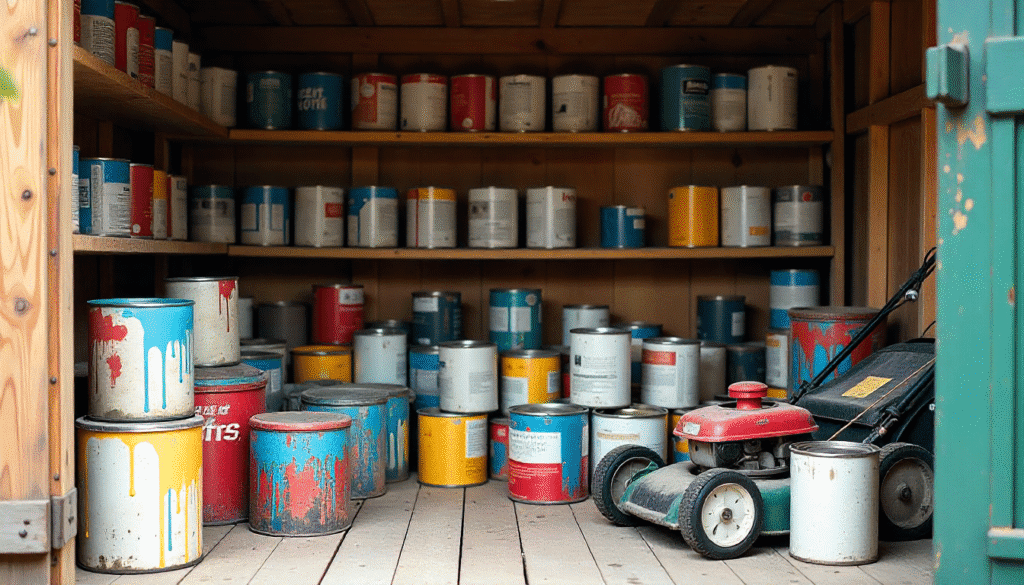
If you’ve lived in Ireland for more than five minutes, you probably have a paint can problem🎨 (See below on how to get rid of them).
In fact, the average Irish household is hoarding 6 to 17 tins of paint. Congrats!

So, you’ve gone out to the shed and pulled back the lawnmower to find three tubs of “Magnolia Mist” left by the previous homeowners. What do you do with them?
❌ not the bin
❌ not in a skip
How about down the drain?

No! It still needs to go to the right place!
Why you can’t just bin old paint cans 🛑
Many paints contain chemicals that are harmful to your health and the environment. Under Ireland’s Waste Management Act (1996), it’s classed as hazardous waste. ☣️
So nope, it’s not just colored liquid. Paints are flammable and toxic. If poured down the drain, paint can contaminate waterways – i.e kill things or harm people. And if these are tossed in the bin or a skip, they could leak and cause issues in the landfill.
Your bin company also won’t thank you for turning their lorry into an abstract painting canvas. And even if you cover it up or try to sneak it, collectors will know, and you could be charged for it.
So, rule number one: paint belongs nowhere near your normal household waste!
So, where to take old paint in Ireland?
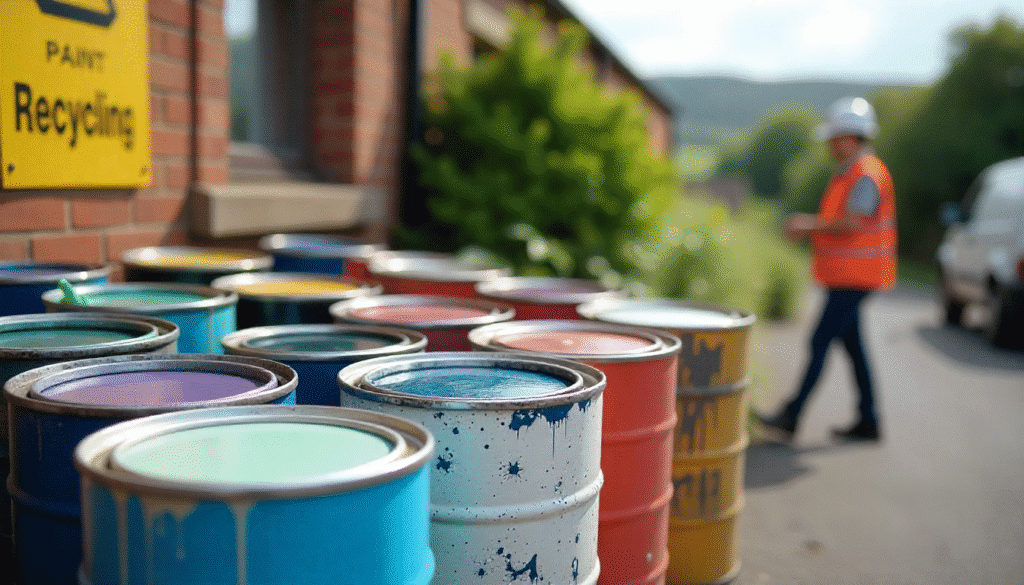
1. Civic Amenity (CA) Sites 📍
Civic Amenity sites are your best friend here. These centers accept leftover household hazardous waste like paint, paint strippers, and thinners. Check MyWaste.ie to find your nearest civic amenity site!
👉 For example, the Fingal County Council accepts household hazardous waste like paint, herbicides, and cleaners, though usually with a small charge. Expect around €2–€4 per can, or sometimes a flat entry fee depending on the site.
What to expect when visiting:
- Paint must be in sealed, labeled tins.
- Don’t mix paint types or pour them into new containers.
- Sites may refuse paint that’s leaking, unlabeled, or stored incorrectly.
✅ Pro tip: Bring paint while it’s still fresh(ish). Hardened or spoiled paint can’t be reused, but liquid paint has a higher chance of being recycled or even passed along for reuse.
2. Paint Reuse Network ♻️
Some civic amnesty sites have teamed up with social enterprises to recycle and redistribute leftover paint. You can check paintreuse.network to see if your local site is part of this!
That half-tub of “Soft Lilac” might not suit your sitting room, but it could be perfect for a community hall or neighbor’s shed. Sharing is caring, after all.
3. Reuse Locally 🏘️
If your paint is still in good condition:
- Offer it to family or friends (bonus points if you can convince your cousin to repaint his garage with it).
- Check local Facebook groups, Freecycle, or community swap events. Someone will always take free paint off your hands.
Make things easier on yourself
If you’ve got paint that can’t be reused, the best thing you can do is harden it before taking it to a recycling center. Hardened paint is easier (and safer) to transport.
🧱 Add sawdust, sand, or soil to the tin.
🌬️ Leave the lid off until the paint solidifies.
If you’d rather not play the waiting game, you can grab a proper paint hardener from the shop, as it speeds up the process and saves the mess.
⚠️ Important: Even when hardened, paint still counts as hazardous waste. Don’t put it in your general rubbish bin! Always bring it back to your local recycling or civic amnesty site for safe disposal.
How about solvent-based paints and thinners?⚠️
Solvent-based paints, thinners, and white spirits are also hazardous waste.
So these have to be brought to a civic amenity site. Do not (repeat, do not) tip them down the drain. It might feel like “just a splash,” but those chemicals can pollute rivers and lakes, harm fish and wildlife, and even affect our drinking water. They can also upset how sewage treatment plants work, making it harder (and more expensive) to keep our water safe.
Hide it in a skip?
So the paint piles up until you eventually call for rubbish removal or hire a skip, and then you realize they can’t accept them and paint actually needs special disposal.
Trying to get around that requirement can land you with a hefty fine if it’s traced back! If hazardous waste like paint is found in your rubbish removal or skip, the EPA can slap you with fines anywhere from €150 to €3000.
Other options to rid of your paint problem
🛒 Buy only what you need – yes, that shocking idea where you don’t buy a 10L tin for a hallway the size of a shoebox.
🎁 Pass leftovers to community projects – schools, charities, or upcyclers will love your “spare beige.”
♻️ Reuse it creatively – think touch-ups, craft projects, or finally painting that thrifted chair.
🌍 Pay the small fee – a couple of euros now saves your shed (and the planet) later. Plus, you’ll have more space for your DIY projects!
Because honestly, any of the above are better than letting the cans rot at the back of your shed.
How to Keep Paint in Good Condition (So You Don’t Waste It)
Sometimes the best way to avoid the Great Paint Can Problem is by looking after your tins properly in the first place.
- Open lids carefully so you don’t wreck the seal.
- Store upright in a cool, dry place (extreme heat or frost ruins paint).
- Prevent skinning by closing the lid tightly, then storing the tin upside down for a few seconds so that a thin layer covers the surface inside.
- Label it: Write the room name and date on the lid (“Bedroom wall – August 2025”). To save future-you from a lot of head scratching and face-palming. 🤦
Clear the Shed, Clear the Head ✨
Every Irish home has its quirks. It could be those creaky floorboards, draughty windows, and yes, stacks of forgotten paint cans shoved in the back of the shed.
A little effort now keeps harmful chemicals out of our environment 🌍 and frees up space for things you’ll actually use (like the lawnmower… or at least somewhere to hide the Christmas decorations).